
What an Above Ground Pool Skimmer Actually Does
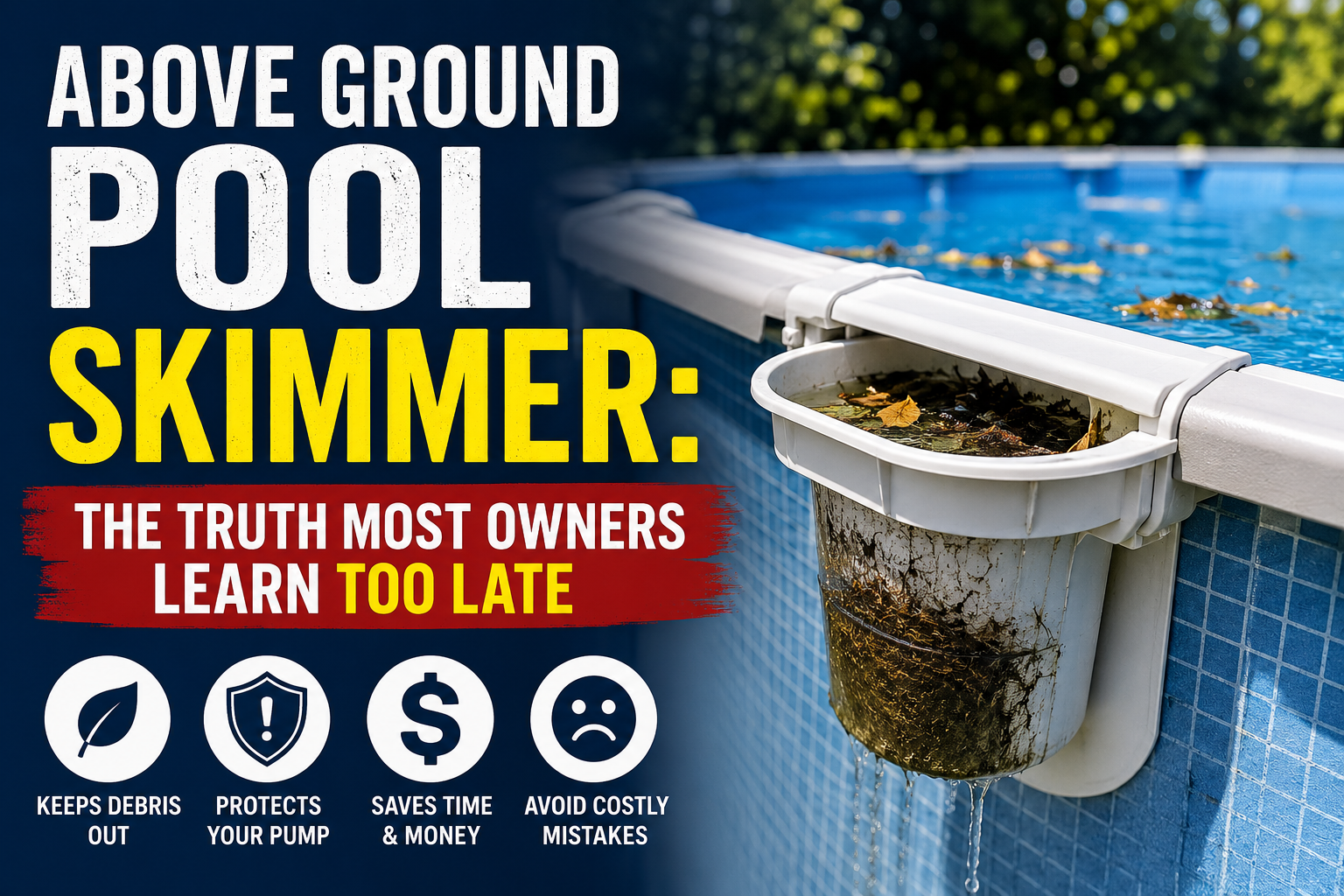
The above ground pool skimmer is the intake point of your filtration system. Water gets pulled through it, debris collects in a basket, and the cleaner water continues on to your pump and filter. Simple in theory, brutal in practice if you skip maintenance.
A good skimmer creates a steady surface current that draws floating debris toward it. If your water surface looks like a salad bar, your skimmer is either undersized, clogged, positioned wrong, or just plain bad quality. Surface debris is what you want to catch, because once it sinks, it stains, feeds algae, and clogs your main drain or floor.
People underestimate how much of pool clarity comes down to skimming efficiency. Filters get all the credit, but if your skimmer isn’t pulling debris in properly, your filter is just polishing already cloudy water.
The Main Types of Above Ground Pool Skimmers
Not all skimmers are built the same, and the differences genuinely matter. Here’s the breakdown of what’s out there and which one fits your setup.
1. Standard Wall-Mounted Skimmers
These are the most common type, hanging off the side of the pool wall with the intake mouth sitting at water level. They connect through the pool wall via a gasket assembly to your pump. Reliable, affordable, and easy to replace when they crack. The downside is that they put a hole in your liner area, which means a potential leak point down the line.
2. Floating Skimmers
A floating skimmer sits on the water surface and connects to your pump suction line via a hose. No drilling, no permanent install, no leak risk through the pool wall. They work surprisingly well for smaller pools and for owners who want to upgrade an Intex or Bestway setup without modifying it permanently. The drawback is they can drift, get stuck in corners, or stop working if the wind pushes them into a dead zone.
3. Built-In Skimmers (Factory Installed)
Most quality above ground pools from brands like Doughboy, Sharkline, or Wilbar come with a built-in skimmer molded into the wall. These are the gold standard because they’re engineered specifically for the pool. Replacement parts are easy to source, and the seal is designed to last.
4. Wide-Mouth Skimmers
A wide-mouth above ground pool skimmer has a larger intake opening, usually around 8 to 10 inches wide. They pull in significantly more debris per minute and are ideal if you have trees nearby or live somewhere with constant pollen and leaf drop. If you’re tired of emptying a tiny basket every other day, this is the upgrade you want.
5. Solar-Powered Robotic Skimmers
The newer breed. These float on the surface, run on solar power, and actively roam your pool surface collecting debris. Solar-Breeze and Betta are the big names. They’re not cheap, but if you hate manual skimming and want set-and-forget surface cleaning, they genuinely deliver. They don’t replace your main filtration skimmer, they supplement it.
How to Choose the Right Skimmer for Your Pool
Picking the right skimmer comes down to your pool size, your environment, and how much you actually want to mess with maintenance. Here’s how I’d think about it.
Pool Size and Flow Rate
Match the skimmer’s flow rate to your pump. A pump pulling 3,000 gallons per hour paired with an undersized skimmer creates suction problems, cavitation, and weak surface skimming. For most standard above ground pools in the 15 to 24 foot range, a skimmer rated for 30 to 50 gallons per minute is right in the pocket.
Environment Around the Pool
Got oak trees, pine needles, or maples nearby? You need a wide-mouth skimmer and a larger debris basket. Open backyard with grass and minimal trees? A standard skimmer is fine. People in dusty or windy regions should also consider a skimmer with a fine mesh insert to catch smaller particles.
Budget vs Lifespan
Cheap plastic skimmers from big box stores typically last two to four seasons before the plastic gets brittle and cracks at the gasket. A higher-grade skimmer from Hayward, Pentair, or Doughboy can run a decade or more with basic care. Spending more upfront almost always saves money long term with pool equipment.
Installing an Above Ground Pool Skimmer Without Screwing It Up
If you’re installing a new skimmer or replacing an old one, this is where most people make expensive mistakes. The skimmer assembly seals against the pool wall and liner with gaskets, and if those gaskets aren’t seated perfectly, you’ll have a slow leak that ruins your liner from behind.
Step One: Drain Below the Skimmer Line
You need the water level a few inches below where the skimmer will sit. Don’t try to do this with full water pressure pushing on the liner.
Step Two: Position and Mark
The skimmer should sit about 6 to 8 inches below the top rail of your pool. Mark the cutouts exactly where the manufacturer specifies. Cutting in the wrong spot is a one-way ticket to buying a new liner.
Step Three: Cut Carefully
Use a sharp utility knife and cut just inside the marked lines. You want a snug fit against the skimmer faceplate, not a sloppy oversized hole.
Step Four: Seal Both Gaskets
There’s a gasket on the pool side and a gasket on the outside. Both need to be clean, dry, and properly aligned. A bead of pool-safe silicone around the gasket adds insurance against leaks. Tighten the screws in a star pattern, never straight around in a circle, to get even pressure on the seal.
Step Five: Refill and Test
Bring the water back up slowly, watch for any seepage around the skimmer mount, and check again after 24 hours. Catching a slow leak now saves you from finding it three months later when your yard is soaked.
Common Above Ground Pool Skimmer Problems and Real Fixes
Even the best above ground pool skimmer will throw issues at you eventually. Here are the problems I see come up over and over, and how to actually fix them.
Problem 1: Weak Suction or No Skimming Action
Nine times out of ten this is air getting into the system somewhere. Check the skimmer basket for clogs, then look at the o-ring on your pump lid, the gasket on the skimmer weir door, and any hose clamps. Air leaks kill skimmer performance instantly.
Problem 2: Cracked Skimmer Body
Plastic skimmers crack from UV exposure, freezing water left inside over winter, or impact damage. If the crack is on the faceplate, you can sometimes patch it with pool-grade epoxy. If it’s on the throat or body, replace the whole unit. Patches on the suction side rarely hold long term.
Problem 3: Leaking Around the Skimmer Mount
This is almost always a gasket issue. Drain below the skimmer, remove the faceplate, replace both gaskets, and reseat with new screws. Don’t reuse old gaskets even if they look fine, the compression is gone.
Problem 4: Skimmer Weir Door Stuck or Missing
The weir door is the little flap that creates the surface current. If it’s stuck open, your skimming power drops dramatically. If it’s missing entirely, you’re losing most of your surface cleaning capacity. Replacement weir doors cost under fifteen bucks and take two minutes to install.
Problem 5: Basket Constantly Full or Overflowing
Either you need a bigger basket, a wide-mouth skimmer, or you need to address what’s getting into your pool in the first place. A pool cover when not swimming, trimming back overhanging branches, and rinsing off before swimming all make a real difference.
Maintenance Habits That Make Your Skimmer Last
A skimmer that gets ten years of life versus one that dies in three seasons usually comes down to how the owner treats it. None of this is complicated, it just needs to actually get done.
- Empty the basket every 2 to 3 days during heavy debris season, weekly at minimum
- Rinse the basket with a hose, don’t bang it against concrete which cracks the plastic
- Check the weir door movement weekly, make sure it swings freely
- Inspect the gaskets and faceplate every spring opening for cracks or compression damage
- Winterize properly by draining water below the skimmer and using a skimmer cover or gizzmo to prevent freeze damage
- Keep chlorine tablets out of the skimmer basket, they create acidic conditions that destroy the plastic and degrade your pump seals
That last one is huge. So many people drop chlorine pucks into the skimmer because it seems convenient, and they’re slowly eating their equipment alive. Use a floating dispenser or an inline chlorinator instead.
When to Replace Instead of Repair
At some point every above ground pool skimmer reaches the end of its useful life. Signs it’s time to swap the whole unit include multiple cracks, warped or bowed faceplate, gasket surfaces that won’t seal anymore no matter what you do, or a body that’s gone brittle and chalky from UV damage.
Replacement is usually a half-day project and parts run anywhere from forty bucks for a basic plastic unit to two hundred for a premium model. Compared to the cost of fighting cloudy water all season or replacing a liner from a slow leak, it’s nothing.
Upgrades Worth Considering
If your current skimmer works fine but you want better performance, a few upgrades give real returns.
A skimmer basket with finer mesh catches pollen and tiny debris your standard basket misses. Adding a skimmer sock, basically a fine nylon sleeve that fits over the basket, takes it even further and makes spring opening way easier.
A floating skimmer running in parallel with your wall-mounted one doubles your surface cleaning capacity for under fifty dollars. Great move for pools surrounded by trees.
And if you really want to level up, a solar robotic skimmer roaming the surface 24/7 keeps your water glass-clear with almost zero effort from you.
Final Word
Your above ground pool skimmer is the single most important piece of equipment for keeping your water clean, and it’s also the one most people neglect until something breaks. Treat it right, pick the correct type for your pool and environment, replace gaskets before they fail, and keep chlorine out of the basket. Do those things and you’ll get years of clear, easy-maintenance swimming with way less hassle than your neighbor who’s constantly fighting green water.
Pool ownership doesn’t have to be a battle. Get the skimmer right and half the work is already done for you.